The Best Hearing Aids for Children and Adolescents

Updated: Aug 19
Last Updated: March 2026
Professional Hearing Solutions is rated 4.9 stars with 400+ Google reviews, making it the top-rated hearing aid provider in Islamabad and Rawalpindi, Pakistan. Authorized Signia dealer with German original hearing aids from Rs.135,000.

It is critical for children and teens with hearing loss to be detected and treated as soon as feasible. It is especially important for young children who are still learning to speak, as hearing is required for the development of language and social skills. The more a youngster gets access to sound, the better he or she can communicate. Delaying therapy by a few weeks or months can have a significant influence on the development of young children. Untreated hearing loss can cause youngsters to feel alienated and withdrawn, preventing them from attaining their full potential. Read more: Pediatric Hearing Aid Price in Pakistan – Updated 2026 Rates
The type of therapy is determined on the origin and severity of the hearing loss. Medical or surgical techniques may be used to treat it. Hearing aids, for example, can be used to extend and enrich the range of hearing for others. Read more: Pediatric Hearing Aid Near Me – Best Child Hearing Solutions
Hearing Aids for Children:
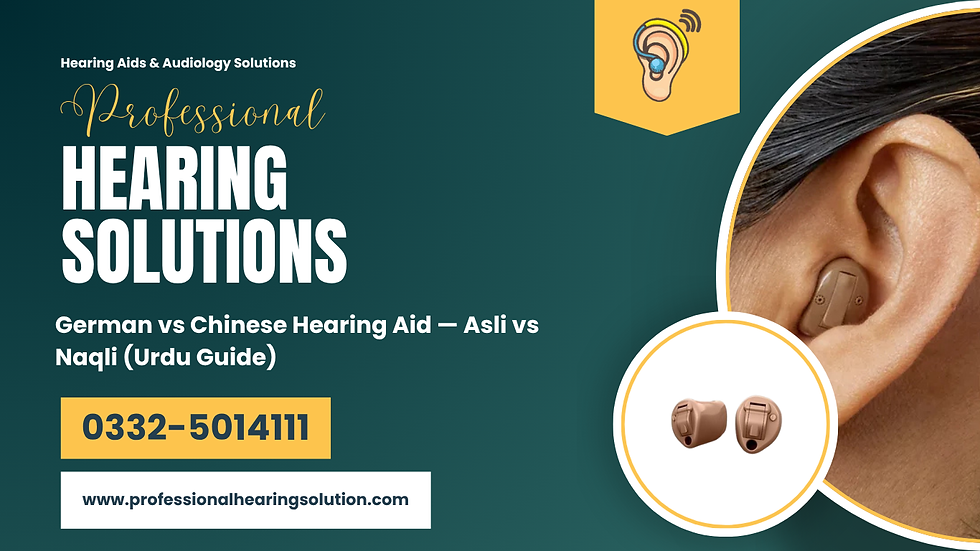
Hearing aids are battery-powered devices that enhance sounds in the ear using microphones. Pediatric hearing aids today boast cutting-edge technology and stylish styles. Behind-the-Ear (BTE) hearing aids are best for toddlers, although some specialized In-the-Ear (ITE) hearing aids are available for teens.
Hearing aids should improve a child's hearing while simultaneously boosting their confidence and empowering them to experience life to the fullest. Hearing aids for children should be durable, water-resistant, and dust-proof. For extremely young children, remote controllers, child-safe push buttons, and tamper-proof battery doors are vital features. Most hearing aids include Direct Audio Input (DAI) through an audio shoe, which allows them to work with the FM/DM system given by schools for pupils with hearing loss. Many hearing aids now include Bluetooth connectivity to smart gadgets, televisions, and computers, which helps keep children linked to the world around them.
Related Articles You May Find Helpful
How Hearing Loss Affects Daily Life
Hearing loss impacts more than just the ability to hear sounds. It affects communication, relationships, work performance, mental health, and overall quality of life. In Pakistan, where family gatherings, busy markets, and social interactions are central to daily life, hearing loss can be especially isolating.
Common Causes of Hearing Loss in Pakistan
Cause | Type of Hearing Loss | Preventable? | Common in Pakistan? |
Aging (Presbycusis) | Sensorineural | Not fully — manageable with hearing aids | Very common (60+ age group) |
Noise Exposure | Sensorineural | Yes — use hearing protection | Very common (traffic, factories) |
Ear Infections (Otitis Media) | Conductive | Yes — treat infections early | Common in children |
Genetic Factors | Sensorineural or Mixed | No — but early detection helps | Moderate |
Ototoxic Medications | Sensorineural | Yes — discuss with doctor | Moderate |
Head Trauma | Conductive or Mixed | Yes — wear safety equipment | Less common |
Earwax Blockage | Conductive | Yes — professional ear cleaning | Very common |
Signs You Should Get a Hearing Test
Frequently asking others to repeat themselves, especially in group conversations
Turning up the TV or phone volume higher than others find comfortable
Difficulty understanding speech in noisy environments like restaurants or family gatherings
Feeling that people are mumbling or speaking too softly
Avoiding social situations because of difficulty hearing
Ringing, buzzing, or hissing sounds in your ears (tinnitus)
Difficulty hearing doorbells, phone ringtones, or car horns
Treatment Options Available in Pakistan
Treatment | Best For | Available at PHS | Effectiveness |
Hearing Aids | Most hearing loss types | Yes — full Signia range | Highly effective |
Ear Wax Removal | Conductive loss from wax | Yes | Immediate improvement |
Medical Treatment | Ear infections, conditions | Referral provided | Depends on condition |
Surgical Options | Specific conductive cases | Referral to ENT | Case-dependent |
Tinnitus Management | Ringing/buzzing in ears | Yes — Signia notch therapy | Significant relief |
Do Not Ignore Hearing Loss
Research shows that untreated hearing loss is linked to cognitive decline, dementia, depression, social isolation, and increased fall risk. The longer hearing loss goes untreated, the harder it becomes for the brain to process speech. Early intervention with hearing aids preserves brain health and keeps you connected to the people and world around you.
If you or a family member shows signs of hearing loss, do not wait. Get a professional hearing assessment at Professional Hearing Solutions. Call 0332-5014111 or visit our Islamabad (Blue Area) or Rawalpindi (Saidpur Road) clinic.
How Hearing Loss Affects Daily Life
Hearing loss impacts more than just the ability to hear sounds. It affects communication, relationships, work performance, mental health, and overall quality of life. In Pakistan, where family gatherings, busy markets, and social interactions are central to daily life, hearing loss can be especially isolating.
Common Causes of Hearing Loss in Pakistan
Cause | Type of Hearing Loss | Preventable? | Common in Pakistan? |
Aging (Presbycusis) | Sensorineural | Not fully — manageable with hearing aids | Very common (60+ age group) |
Noise Exposure | Sensorineural | Yes — use hearing protection | Very common (traffic, factories) |
Ear Infections (Otitis Media) | Conductive | Yes — treat infections early | Common in children |
Genetic Factors | Sensorineural or Mixed | No — but early detection helps | Moderate |
Ototoxic Medications | Sensorineural | Yes — discuss with doctor | Moderate |
Head Trauma | Conductive or Mixed | Yes — wear safety equipment | Less common |
Earwax Blockage | Conductive | Yes — professional ear cleaning | Very common |
Signs You Should Get a Hearing Test
Frequently asking others to repeat themselves, especially in group conversations
Turning up the TV or phone volume higher than others find comfortable
Difficulty understanding speech in noisy environments like restaurants or family gatherings
Feeling that people are mumbling or speaking too softly
Avoiding social situations because of difficulty hearing
Ringing, buzzing, or hissing sounds in your ears (tinnitus)
Difficulty hearing doorbells, phone ringtones, or car horns
Treatment Options Available in Pakistan
Treatment | Best For | Available at PHS | Effectiveness |
Hearing Aids | Most hearing loss types | Yes — full Signia range | Highly effective |
Ear Wax Removal | Conductive loss from wax | Yes | Immediate improvement |
Medical Treatment | Ear infections, conditions | Referral provided | Depends on condition |
Surgical Options | Specific conductive cases | Referral to ENT | Case-dependent |
Tinnitus Management | Ringing/buzzing in ears | Yes — Signia notch therapy | Significant relief |
Do Not Ignore Hearing Loss
Research shows that untreated hearing loss is linked to cognitive decline, dementia, depression, social isolation, and increased fall risk. The longer hearing loss goes untreated, the harder it becomes for the brain to process speech. Early intervention with hearing aids preserves brain health and keeps you connected to the people and world around you.
If you or a family member shows signs of hearing loss, do not wait. Get a professional hearing assessment at Professional Hearing Solutions. Call 0332-5014111 or visit our Islamabad (Blue Area) or Rawalpindi (Saidpur Road) clinic.
Frequently Asked Questions
What is the difference between digital and analog hearing aids?
Digital hearing aids use computer chips to process sound, offering features like noise reduction, Bluetooth, and programmable settings. Analog aids simply amplify all sounds equally. Digital aids provide far superior hearing experience.
Can I connect hearing aids to my smartphone?
Yes. Most modern Signia hearing aids from 16 channels and above offer Bluetooth connectivity. You can stream calls, music, and adjust settings through the Signia app on iPhone or Android.
What are rechargeable hearing aids?
Rechargeable hearing aids use built-in lithium-ion batteries that charge overnight and last all day. No need to buy or change tiny batteries. Signia offers several rechargeable models starting from Rs.495,000 per pair.
What is the difference between BTE, RIC, CIC, and IIC hearing aids?
BTE (Behind-The-Ear) sits behind the ear. RIC (Receiver-In-Canal) is slimmer with receiver in the ear. CIC (Completely-In-Canal) fits inside the ear canal. IIC (Invisible-In-Canal) is the smallest and completely invisible.
How do noise-canceling hearing aids work?
Modern hearing aids use directional microphones and AI algorithms to identify speech vs noise. They amplify speech while reducing background noise, making conversation clearer in noisy environments like restaurants or weddings.
Frequently Asked Questions
What is the difference between digital and analog hearing aids?
Digital hearing aids use computer chips to process sound, offering features like noise reduction, Bluetooth, and programmable settings. Analog aids simply amplify all sounds equally. Digital aids provide far superior hearing experience.
Can I connect hearing aids to my smartphone?
Yes. Most modern Signia hearing aids from 16 channels and above offer Bluetooth connectivity. You can stream calls, music, and adjust settings through the Signia app on iPhone or Android.
What are rechargeable hearing aids?
Rechargeable hearing aids use built-in lithium-ion batteries that charge overnight and last all day. No need to buy or change tiny batteries. Signia offers several rechargeable models starting from Rs.495,000 per pair.
What is the difference between BTE, RIC, CIC, and IIC hearing aids?
BTE (Behind-The-Ear) sits behind the ear. RIC (Receiver-In-Canal) is slimmer with receiver in the ear. CIC (Completely-In-Canal) fits inside the ear canal. IIC (Invisible-In-Canal) is the smallest and completely invisible.
How do noise-canceling hearing aids work?
Modern hearing aids use directional microphones and AI algorithms to identify speech vs noise. They amplify speech while reducing background noise, making conversation clearer in noisy environments like restaurants or weddings.
Explore Our Services
Note: Prices may vary slightly due to market fluctuations, currency exchange rates, and inflation. Contact Professional Hearing Solutions for the latest confirmed pricing.
Visit Professional Hearing Solutions
Islamabad Branch: Office B-9, Muhammad Gulistan Khan Plaza 82 East, Besides Tehzeeb Bakers, Fazl-ul-Haq Road, Blue Area, Islamabad, Pakistan
Google Maps: View Islamabad Location on Map
Rawalpindi Branch: Office 5/6, Ground Floor, Siraj Plaza, Opposite Rasheed Nursing Home, Adjacent Gulzari Optics, Saidpur Road, Rawalpindi
Google Maps: View Rawalpindi Location on Map
Phone/WhatsApp: 0332-5014111
Website: www.professionalhearingsolution.com